

Begin Gently
You don’t need to understand anything before you start.
This page is here for moments when thinking feels effortful, when your body feels tense or shut down, or when you simply need a place to pause without being asked to do more.
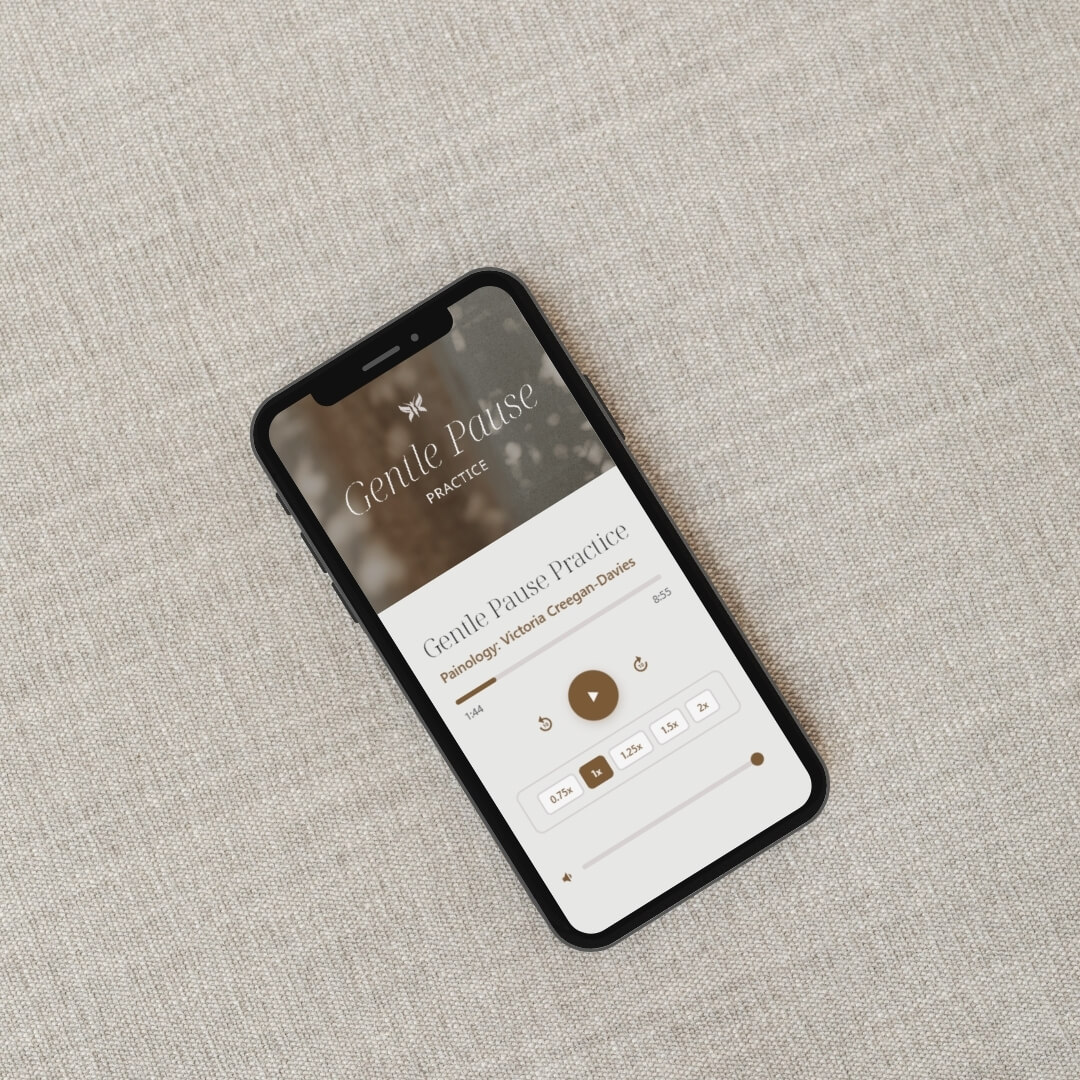
The practice below is short and low-demand. It’s designed to reduce internal pressure and support your system to settle - without trying to change how you feel.
Before you begin
A few things to know:
You don’t need to feel calm for this to be helpful.
You don’t need to concentrate perfectly.
You don’t need to “do it right”.
You can listen lying down, sitting, or however feels most comfortable.
If your attention drifts, that’s fine.
If you stop early, that’s fine too.
Just begin where you are.
Begin the practice
Guidance note
This practice works by gently shifting attention and reducing internal strain. Even subtle changes count.
Begin the practice
Guidance note
This practice works by gently shifting attention and reducing internal strain. Even subtle changes count.
After the practice
You might notice a small change.
You might notice nothing at all.
Both are normal.
This work isn’t about producing a feeling. It’s about creating the conditions where your system doesn’t have to work so hard.
You don’t need to repeat this daily.
You don’t need to commit to anything.
You can return to it whenever it feels useful.
Episode Title
After the practice
You might notice a small change.
You might notice nothing at all.
Both are normal.
This work isn’t about producing a feeling. It’s about creating the conditions where your system doesn’t have to work so hard.
You don’t need to repeat this daily.
You don’t need to commit to anything.
You can return to it whenever it feels useful.
If you’d like to understand more
If you’re curious about how this practice fits into the wider Painology approach, you can explore the framework that guides this work.
This explains how people move from survival and overwhelm toward greater stability, clarity, and choice - at their own pace.
If you’d prefer to continue gently
If it feels better to stay with experience rather than explanation, you can explore other supportive practices designed to work in a similar way.
Optional: find your starting point
If at any point you’d like help identifying where you’re starting from, there’s a short quiz that some people find helpful.
It’s not a test or a diagnosis - just a way of orienting yourself.
One final thing
You don’t need to fix yourself to move forward.
Often, the most meaningful change begins when the body feels listened to, rather than pushed.
This page will still be here whenever you need it.
Start here
Choose one option
You don’t need a diagnosis.
You don’t need motivation.
You don’t need to understand everything first.
You just need a starting point.
Option 1
Find your starting point
(2 minutes)
If you want clarity quickly, you can take a short quiz designed to help you understand where you’re at right now.
It helps you:
recognise patterns behind physical pain, overwhelm or shutdown
see where you may be on the Painology Pathway
understand what would help next
It’s not a test.
There are no right or wrong answers.
Just information that often brings relief and clarity.
Option 2
Begin with a gentle practice
(5 minutes)
If you don’t want to think or analyse, you can start with a short, body-based practice.
This option is often helpful if:
you’re exhausted or overloaded
your body feels tense, wired or shut down
you want to feel a difference before reading more
You don’t need to feel calm.
You don’t need to do it ‘right’.
Just start where you are.
If you want to understand more
You can explore:
Why
Painology
Exists

The
Painology
Pathway
Or you can stop here for now.
One step is enough.
A final thing worth knowing
Most people who find Painology say the same thing:
‘I didn’t realise how much I’d been fighting my body - until I stopped.’
This work exists to offer a different way forward.
One that begins with awareness and understanding,
and often changes far more than people expect.



Empowering the journey from pain to purpose, one person at a time
© Copyright 2026 Painology - Privacy Policy - Terms & Conditions - Built on FEACREATE - Design by ElenaKoz

Free Download
Overcome pain, discover your true self and transform your life
Your free guide to finding authenticity and thriving despite chronic pain.